
How and Where to Train in the World of Adaptive Sports
The world of sports is open to everyone, regardless of physical ability. For people with visual impairments, adaptive sports become a form of physical activity, a way to socialize, build confidence, and achieve goals. In these disciplines, hearing, tactile perception, and teamwork play the primary roles.
Adaptive Sports and Their Unique Features
Adaptive sports for people with visual impairments continue to develop actively, creating opportunities both for physical activity and for participation in international competitions.
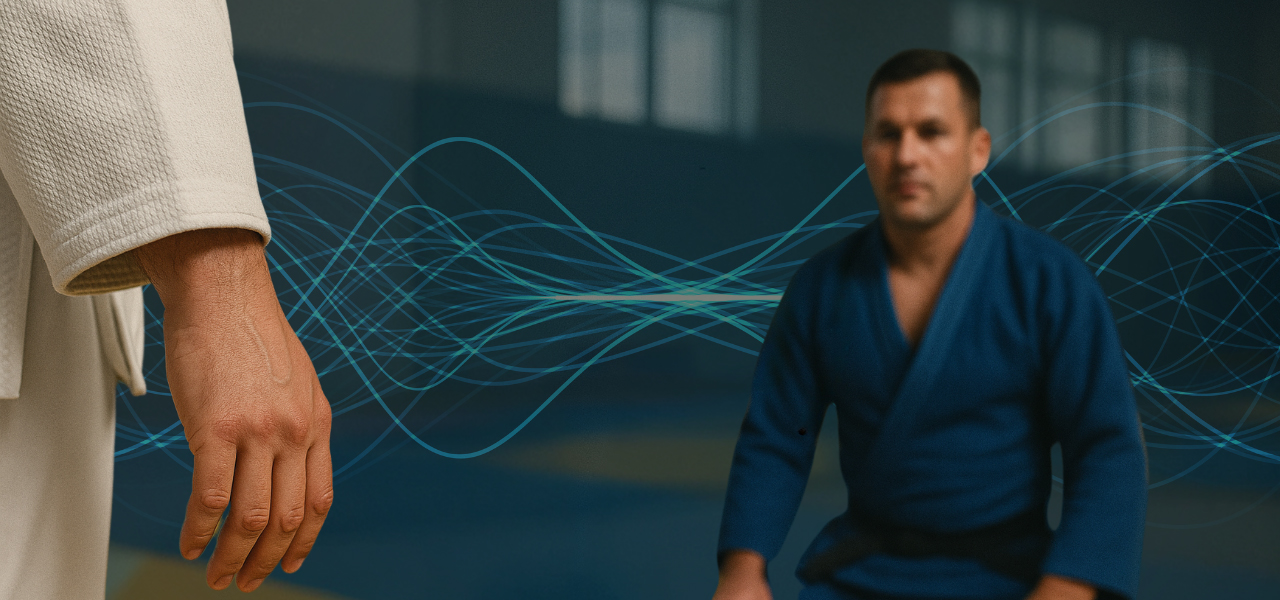
Judo for the blind has been part of the Paralympic programme since the Seoul 1988 Games and is contested only by athletes with a vision impairment (IPC). This sport is adapted so that the bout starts with a grip (IBSA Judo Rules), allowing athletes to feel the opponent’s balance, weight, and movements from the very first seconds. This approach makes training safer and more accessible, while also developing tactile perception and a sense of balance.
Blind fencing is most developed in Italy, where the Italian Fencing Federation recognised a national circuit in 2014. Only the épée is used, a guide line runs along the whole piste to lead the athlete toward the opponent, and a distinct sound signal shows who scored the hit (Accademia Scherma Milano). In France, clubs such as OGC Nice Escrime offer épée for blind and visually impaired fencers. Athletes develop their hearing, tactile sensitivity, and ability to anticipate their opponent’s actions.
Chess for the visually impaired and blind is organised internationally by the International Braille Chess Association (IBCA), which has more than 75 member nations and holds the Blind Chess Olympiad and the Blind World Chess Championship, played on boards adapted for tactile play. Each square and piece has tactile differences, enabling players to fully control the game. Chess helps develop strategic thinking, concentration, and memory, and creates an inclusive environment for communication and competition.
Coxed rowing for athletes with visual impairments is part of the PR3 para-rowing class: a PR3 mixed coxed four may include up to two visually impaired rowers, and the coxswain is responsible for steering and calling instructions (World Rowing). Great Britain has been unbeaten in the PR3 mixed coxed four since 2010 (British Rowing). Rowing builds strength, endurance, and teamwork, while also offering opportunities to compete at national and international levels.
We have already covered sports for blind people such as goalball, swimming, blind football, table tennis, blind cricket, horseback riding, golf, polybat, running, and skiing.
In the next piece, we will talk about specialized games such as showdown and acoustic shooting, which are becoming increasingly popular among visually impaired athletes.
Where and How You Can Train
In Europe and North America, goalball is played in blackout masks, with a ball equipped with bells. Teams of three try to throw the ball into the opponent’s goal. It is a Paralympic sport widely developed in many countries on both continents. Blind soccer is particularly popular in South America, Europe, and the USA, and is part of the Paralympic Games. Other popular sports include judo, swimming, track and field with guide running, tandem cycling, skiing with guides, coxed rowing, tactile chess, and specialized games such as showdown and acoustic shooting.
You can train in the UK in the city of Hereford, home to the Royal National College for the Blind, a specialist college for blind and visually impaired people. Its Sports Academy focuses on goalball, football, and judo, and students can also take part in sports such as cricket, cycling, golf, tennis, and acoustic shooting. In the USA, adaptive sports are coordinated by organizations such as the U.S. Association of Blind Athletes, which supports national programs in goalball, blind soccer, track and field, swimming, and other disciplines. Ski for Light organizes annual skiing events with guides, and the Braille Institute of America runs physical activity programs for people with visual impairments. The Perkins School for the Blind in Massachusetts promotes physical education among young people with visual impairments, and in Miami, Lighthouse for the Blind offers a program teaching blind football to children.
In Europe, the Sport Accessibility project, run with the Eye Association Netherlands and the European Blind Union, aims to remove barriers in sports clubs for people with visual impairments. The International Blind Sports Federation (IBSA) coordinates the development of core sports for the blind and organizes world championships. In the USA, Camp Abilities, first held at SUNY Brockport, runs one-week developmental sports camps for children and teens who are blind, visually impaired, or deafblind.
Training is conducted under the guidance of experienced instructors who use methods based on auditory and tactile cues, work with guide assistants, offer individual instructions, and set up acoustic markers in sports halls.## Support and Organizations
Support and organization play a crucial role in developing adaptive sports and creating conditions for people with visual impairments to participate in competitions. One example is British Blind Sport in the UK. Founded in 1975, this charity is the National Disability Sport Organisation for people with sight loss in the UK. It works with leisure centres, clubs, and national governing bodies to make sport more accessible, runs in-person and virtual events that introduce people with sight loss of all ages to inclusive sports, and provides sight classification for competition (British Blind Sport).
In Germany, the Deutscher Behindertensportverband (DBS) is the National Paralympic Committee for Germany and, with 17 state and 2 specialist associations, almost 6,300 clubs, and about 525,000 members, one of the largest sports federations for people with disabilities in the world (DBS). It covers performance, recreational, prevention, and rehabilitation sport for people with all kinds of disabilities, and around 39,000 licensed instructors work in its structures (DBS statement to the Bundestag, 2025).
In France, one of the key organizations is Fédération Française Handisport. It offers a wide range of disciplines for people with various disabilities, including blind and visually impaired athletes. For more than 30 years it has co-organised national criteriums for young visually impaired athletes in athletics, torball, archery, and swimming (Fédération Française Handisport), and in 2026 it signed a national partnership with UNADEV to expand access to sport for blind and partially sighted people (FFH and UNADEV).
Why It Matters
Sports for blind and visually impaired people provide opportunities to overcome physical and psychological barriers. They develop hearing, touch, coordination, and self-confidence. Participation in competitions helps athletes feel part of a larger sports community and proves that limitations do not prevent achieving high results.
This type of sport offers a new perspective on human potential, where sound truly becomes more important than sight.