Final Fantasy VI Pixel Remaster — An Accessible JRPG for Blind Players

Final Fantasy VI Pixel Remaster is a cult Japanese RPG that, thanks to the community and the FF6ScreenReader modification, has become accessible to blind and visually impaired players. This article explores how a classic JRPG built around turn-based combat, complex menus, and text-heavy dialogue can function seamlessly with screen readers such as NVDA and JAWS, and why FFVI is now considered one of the strongest examples of accessible retro games for blind players.
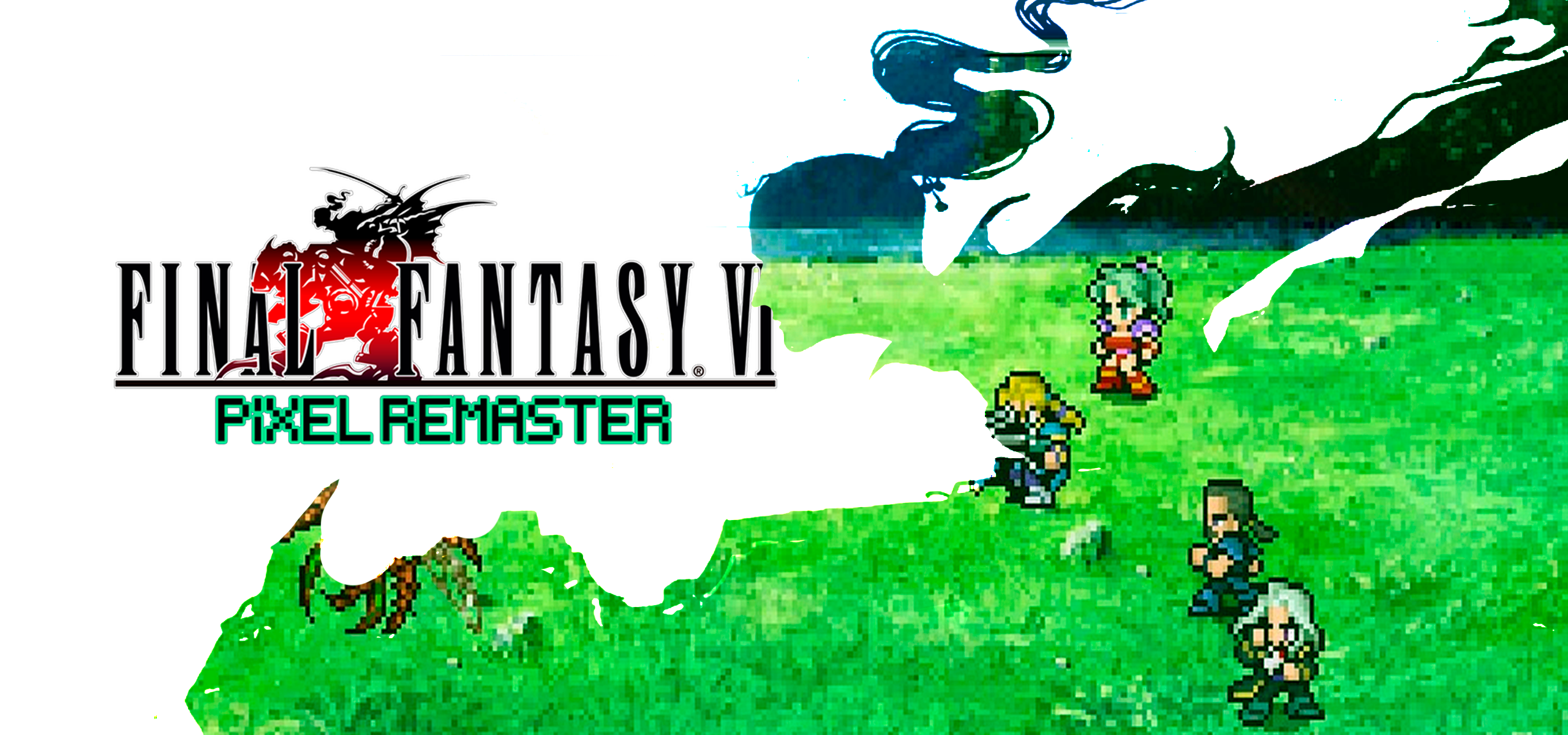
Final Fantasy VI — A Timeless Classic
Over the decades, the video game industry has produced works that, much like great novels or classical operas, remain untouched by time.
In 1994, at the twilight of the 16-bit era, Square (now Square Enix), under the leadership of the legendary Hironobu Sakaguchi and directors Yoshinori Kitase and Hiroyuki Ito, released the sixth entry in its flagship series. Final Fantasy VI was more than just another RPG; it marked a radical departure from traditional high fantasy toward a darker steampunk aesthetic, presenting players with a distinctive cast of fourteen protagonists and a narrative that explores terraforming, tyranny, free will, and the value of the human soul. Nobuo Uematsu’s music and Yoshitaka Amano’s character designs transformed the game into a grand digital drama, widely recognized by critics.
However, for the blind gaming community, this iconic work remained hidden behind a dense fog of inaccessibility for decades. The JRPG genre—with its endless text tables, turn-based battles, and reliance on visual cues to navigate intricate labyrinths—has always been among the most challenging to experience without sight. We could hear praise for “that famous opera scene” or Kefka’s mad laughter, but the very fabric of the game—its mechanics, progression systems, and dialogues—remained silent to us.
Everything changed with the release of the Pixel Remaster series. This large-scale re-release not only carefully refreshed the visuals and delivered stunning orchestral arrangements of the soundtrack, but also laid the groundwork for a major technological breakthrough in inclusivity. Thanks to the dedicated work of an enthusiast developer known as BlindGuyNW, who created the FF6ScreenReader modification, the wall separating blind players from the world of Magicite finally collapsed.
Today, Final Fantasy VI is not merely a classic from the past; it is a living, audible world where every spell, every menu entry, and every line of dialogue is delivered directly through a screen reader.
Story: Fragments of Forgotten Magic and the Steel Heart of an Empire
The events of Final Fantasy VI unfold in a world that suffered an apocalypse a thousand years before the game begins. The legendary War of the Magi left behind scorched wastelands and stripped humanity of the very ability to wield magic. Once woven into reality itself, magic faded into a frightening legend, replaced by steam, coal, and cold iron. We encounter this world during an industrial revolution, where imposing fortress-cities stand beside grim mining towns, and the sky is choked with smoke from massive factories.
Yet the apparent stability of this world is an illusion. The ruthless Gestahlian Empire has discovered a way to resurrect ancient power by merging magic with technology. Thus, Magitek weaponry was born—a monstrous hybrid of living energy and steel, enabling the Empire to wipe entire kingdoms from the map.
The story begins amid the piercing winds of the northern mountains, in the mining town of Narshe. A group of imperial soldiers, piloting massive mechanical armor, arrives to seize Valigarmanda—an Esper trapped in ice. Among them is Terra Branford, a mysterious young woman whose mind is shackled by a Slave Crown, forcing her to obey imperial orders without question. Her encounter with the ancient being triggers a violent surge of magic: the control device malfunctions, and Terra loses her memory. Now she must confront a world she no longer remembers and uncover the nature of the strange power within her.
Final Fantasy VI is not the story of a single hero. It is an epic tapestry woven from the lives of many characters, each carrying a deeply personal tragedy.
- Locke Cole — a noble adventurer driven by an obsessive need to save others, born from his failure to protect the one he loved most.
- Edgar and Sabin Figaro — royal brothers, one choosing the burden of the crown, the other the freedom of a wanderer, their fate decided by a simple coin toss.
- Celes Chere — a former imperial general, engineered in laboratories as a perfect weapon, yet still capable of compassion and doubt.
Above them all looms the shadow of Kefka Palazzo. He is not a conventional conqueror seeking power. Kefka is chaos incarnate—a court jester whose mind was burned by magitek experiments. His laughter is a sentence passed on reason itself, and his sole desire is to watch the world drown in fire and madness.
The game’s story takes us through palace intrigues, mystical forests where you can encounter ghostly trains, and even opera houses, turning into a philosophical reflection on what makes us human. It’s a story about finding identity in a world where you’re just a tool, about forgiving yourself, and about the seeds of hope that can sprout even through rust and ashes. In Disco Elysium’s Revachol, we pieced together our identity from fragments of memory, and in the world of FFVI, we’ll have to nurture the hope of an entire civilization on the brink of destruction.
Gameplay: Tactical Depth and Variety
The gameplay of Final Fantasy VI is far from a generic turn-based JRPG. It is a complex, layered system that rewards curiosity and strategic thinking. In the Pixel Remaster version, the developers preserved the classic depth while adding a modern polish that, combined with accessibility tools, transforms the game into an engaging intellectual challenge.
Active Time Battle (ATB)
Unlike classic turn-based games, where enemies patiently wait for your decision, FFVI uses the ATB system. Each character has a bar that fills up in real-time. Once it’s full, it’s your turn to act.
This creates a unique sense of tension, as enemies can strike while you’re selecting a spell from the menu. For blind players, this rhythm becomes tangible thanks to the accessibility mod, which provides real-time updates on who’s taking turns and the party’s health. Combat becomes a dynamic dance, where quick decisions must be made based on sound cues and the screenreader’s voice.
Magicite System
The central pillar of character progression is the Esper and Magicite system. In this world, people are not born as mages (with rare exceptions); instead, they learn magic by discovering the remains of fallen mythical beings.
Learning through contact: By equipping Magicite—the crystallized essence of an Esper—a character begins to earn ability points after each battle. Over time, these points permanently unlock the spells bound to that crystal.
Build formation: Through the power of Espers, party members not only learn spells but also receive attribute bonuses—such as strength, speed, or magical power—upon leveling up. This allows players to quite literally “sculpt” any character into the exact combat role they need. With the accessibility mod, players can always listen to detailed spell progress and know precisely which bonuses a given character will receive
Command Abilities
Final Fantasy VI stands apart from other entries in the series by giving each of its fourteen playable characters a unique combat mechanic that reflects their personality and narrative role.
- Edgar’s Tools: The inventor king wields mechanical devices in battle—from circular saws to noise blasters—that consume no mana and deal area-of-effect damage.
- Sabin’s Blitz techniques: This monk requires the player to input specific button combinations, similar to fighting game commands. The accessibility mod enables precise control over this process, effectively turning combo execution into a rhythm-based interaction.
- Celes’s Runic magic: She can raise her blade and absorb any incoming enemy spell, converting it into mana. This ability is a critically important tactical tool in boss encounters.
- Strago’s Lore: The elderly mage learns enemy abilities if they are used against him. This turns the collection of enemy attacks into a distinct “game within the game.”
For blind players, the gameplay of Final Fantasy VI Pixel Remaster—through the lens of the FF6ScreenReader mod—presents itself as a perfectly structured flow of information.
- Inventory and equipment: The mod transforms chaotic item lists into a coherent audio stream. Players hear not only the name of a weapon, but also how their attack or defense stats will change before confirming a choice.
- Battlefield awareness: In the heat of combat, the screen reader announces critical conditions such as poison, petrification, or dangerously low health. This enables timely use of items or healing spells.
- Automation and comfort: The Pixel Remaster auto-battle feature allows characters to repeat their last actions, significantly easing the grinding process. Players can focus on the story and world exploration while delegating routine actions to automation, which is also fully voiced by the mod.
Gameplay here is a constant experiment. Players combine character abilities, select Espers, and search for enemy weaknesses. Thanks to modern accessibility tools, this intellectual challenge has ceased to be a visual puzzle and has become a fair, deep, and genuinely engaging strategic experience.
Accessibility Mod: An Invisible Companion on a Dangerous Path
The accessibility modification functions as an intelligent intermediary, extracting textual information directly from the game’s memory and instantly transmitting it to the player’s screen reader (NVDA or JAWS). This gives the player full control over every aspect of the adventure:
- Reading dialogues and descriptions: Every line of dialogue, every inscription on an ancient tablet, and every item description in a shop is read aloud by the player’s screen reader
- Combat interface: In the heat of battle, the mod becomes a tactical advisor. It announces whose turn it is, voices current health and mana values, and reports enemy actions, allowing the player to react to threats in time.
- Inventory management: Players can independently equip party members and examine the statistics of hundreds of weapons and armor pieces, maintaining a full sense of agency and control.
Navigation System
One of the most important features of this mod is its carefully designed navigation assistance system, which transforms movement through the pixel world from blind wandering into deliberate, informed travel.
- Spatial orientation: The mod announces the names of current locations and zones when transitioning between them, helping the player understand exactly where they are.
- Audio markers and coordinates: Using dedicated functions, players can request their current map coordinates and receive notifications about nearby interactive objects—such as doors, treasure chests, or key characters. This creates a kind of “audio map,” allowing players to mentally construct routes and confidently move toward their objectives.
Documentation and Hotkeys
The mod’s developer has ensured that the learning process is as comfortable as possible. The mod archive includes a detailed Read Me file that serves as a comprehensive guide to all available functionality.
- Installation guide: The document thoroughly describes the process of integrating the mod into the game files, allowing players to prepare the project for launch within minutes.
- Hotkey reference: The file contains a complete list of key combinations used to control accessibility features. With a single keystroke, players can instantly repeat the last spoken line, check party status, or activate navigation prompts.
The presence of such detailed documentation makes it possible to adapt to the navigation system relatively quickly and begin an engaging journey without unnecessary barriers.
Soundtrack and Sound Design
The musical and sound components of the game are of solid quality overall.
Music deserves a more detailed discussion, but as for the sound design itself, it partly reminded me of Stardew Valley. I believe both games are connected by their pixel-based aesthetic and a shared respect for the legacy of the 1990s. When recreating the remaster, the developers deliberately avoided implementing an overly modern sound design on the level of the Final Fantasy VII Remake or Final Fantasy XVI.
That said, spatial positioning was clearly taken into account. The sounds themselves are memorable and easy to read, while the interface signals are varied and distinct.
Nobuo Uematsu’s Musical Legacy
The soundtrack, composed by the legendary Nobuo Uematsu, has long been regarded as a masterpiece of game music. In the Pixel Remaster version, however, it has gained a new and remarkable depth. Instead of the electronic soundscape of the 16-bit era, players are now met with full orchestral arrangements recorded with live instruments.
- Leitmotifs as navigational anchors: One of FFVI’s most brilliant qualities is its use of distinct personal themes for each of the main characters. The music instantly signals who is currently in focus, even before a screen reader has had time to announce the name.
- An operatic masterpiece: The famous opera house scene represents the emotional peak of the game. In the Pixel Remaster version, it has been completely reworked: the arias are now performed by professional vocalists in multiple languages. This transforms the sequence into a truly immersive performance, where the singer’s voice and orchestral accompaniment create the sensation of being present in a real opera hall.
- Dancing Mad: The final battle is accompanied by one of the most complex and longest compositions in the history of the industry.
Conclusion
Final Fantasy VI Pixel Remaster is not merely a tribute to the past, but a clear demonstration that true narrative depth and scope do not depend on the number of polygons on screen. The game reinforces an essential truth: to experience a great adventure, it is not necessary to see every visual detail—what matters is access to the very essence of the work.
Through the combination of the remaster creators’ careful craftsmanship and the talent of accessibility tool developers, a universe that long remained distant has finally opened up. Blind players are no longer passive observers; they become full participants in this epic journey, where every tactical decision and every dialogue choice carries real weight.
This is one of those rare cases where modern technology and classical art converge to make the world slightly broader and more comprehensible for everyone.
If you are looking for a project that does more than simply entertain—one that leaves a lasting imprint on your thoughts—then the sixth entry in the series is the right choice. It is a story about resilience, about the right to make mistakes, and about the extraordinary strength we find in one another during the darkest times.
Configure the mod, immerse yourself in the orchestral grandeur of the soundtrack, and allow this saga to guide you forward. The path to saving the world is open—and it has never sounded so beautiful. See you across the vast ocean of InviOcean.