Education for the Blind: How Blind Students Learn and Build a Career

Education is the foundation for knowledge, future careers, social mobility, and self-realization. For blind people, the path to education is often accompanied by additional challenges: perceptual barriers, technical limitations, and a lack of adapted resources. Nevertheless, thanks to the development of technologies, volunteer initiatives, and growing social awareness, it is possible to study, pursue higher education, and build a successful career even if you cannot see.
Main Barriers in Online Education
For blind and visually impaired people, online education often faces the following problems:
- Inappropriate interface design. Many educational platforms, university websites, and distance learning systems are designed with visual perception in mind: graphics, menus, buttons, images, PDF content without adaptation. Such design is inaccessible for those using screen readers or Braille devices.
- Lack of alternative content. Often, learning materials, lectures, and guides are available only as images, scans, or PDFs without text, making them inaccessible. Without text recognized by reading software, it is impossible to listen to lectures or access content.
- Problems with visual elements. Diagrams, charts, tables, and graphs are difficult for blind students to understand if there is no descriptive text or alternative formats.
- Limited support from educational institutions. Not all schools, colleges, or universities have the resources to provide adaptations: accessible textbooks, assistant help, specialized software. This is especially true in regions with limited resources.
- Stereotypes and lack of understanding. Sometimes teachers and classmates do not understand the difficulties faced by blind students: they may underestimate challenges, overestimate independence, or fail to offer help. This complicates learning and creates a barrier of social isolation.
These barriers make the path to education difficult, and without special support, adaptations, and technology, many blind people are simply deprived of the opportunity to study within a standard educational system.
Get prepared for higher education — take the course.
Assistive Solutions in the Learning Process
Fortunately, modern technologies provide real tools that allow blind students to learn almost on par with sighted peers:
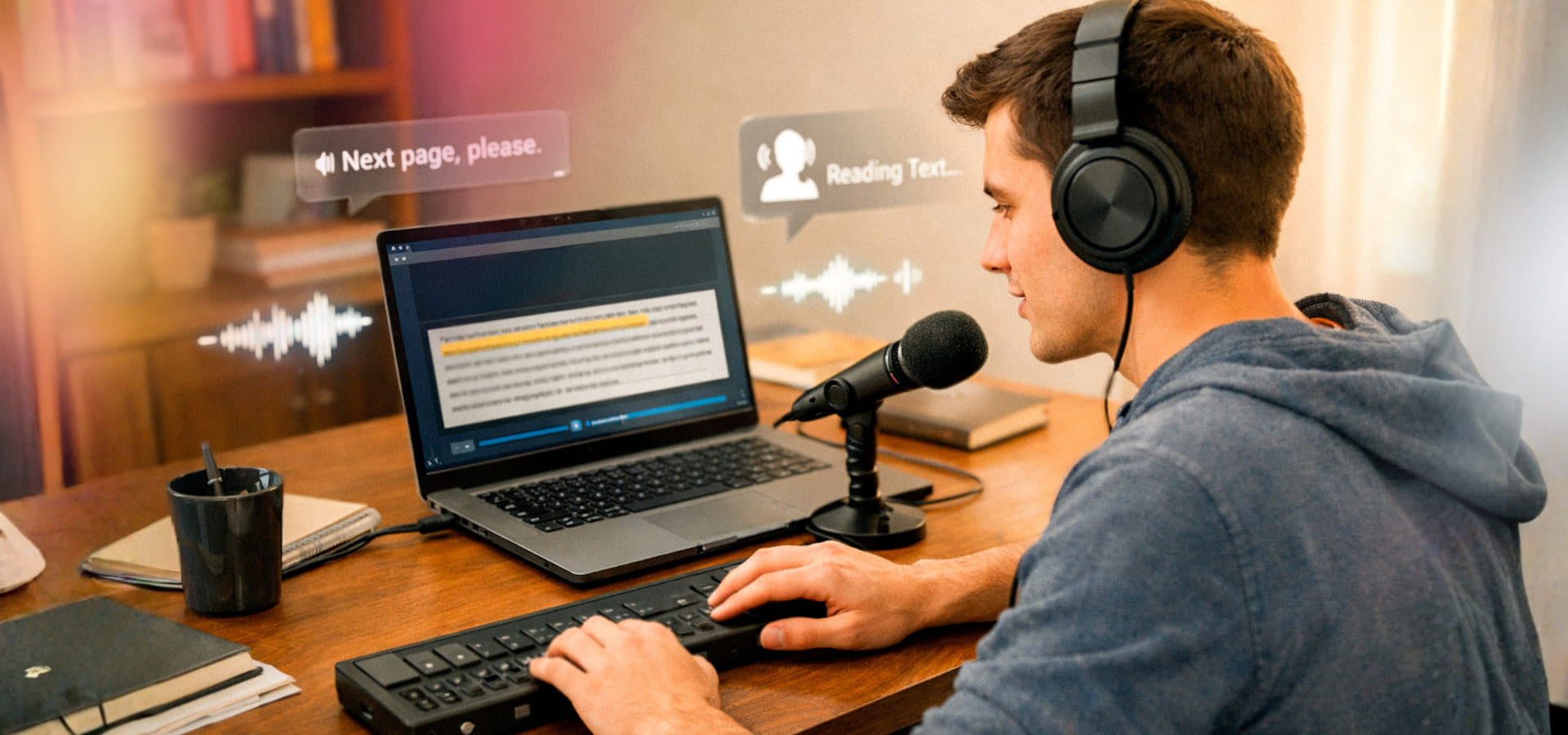
- Screen readers. This software reads aloud the text on the screen, vocalizes menus, links, and button descriptions, allowing navigation of a computer, browser, or learning platform interface. With them, a blind student can listen to lectures, read texts, and work with documents.
- Voice assistants. In combination with screen readers, voice assistants can help with navigation, program launching, and file searches, thereby easing everyday computer work.
- Braille displays and output devices. For those who can read Braille, displays convert screen text into Braille, allowing tactile work with materials. This is especially important for reading, writing, and working with texts and tables.
- Adapted material formats. When textbooks, lectures, and presentations are created with accessibility in mind, with alternative text, structure, and metadata, they become compatible with screen readers and Braille displays.
Such technologies reduce the entry barrier for online education and make the learning process much more accessible.
How to Adapt Educational Platform Interfaces
For online platforms to truly be accessible for blind users, certain efforts are required from developers, educators, and educational administrators:
- Semantic layout and structure. Web pages, learning portals, and LMS (learning management systems) should be semantically coded so that screen readers can correctly recognize headings, lists, tables, links, and buttons. Developers must use proper HTML tags, alt attributes for images, and descriptive button and link labels.
- Alternative text and descriptions. All images, charts, diagrams, and graphs should have alternative text (alt-text) or, preferably, textual descriptions so that blind users can understand the content.
- Accessible document formats. Learning materials such as books, articles, presentations, and assignments should be provided in formats readable by software: structured HTML, tagged PDFs, or text files. Scans and photos of pages without recognized text are not usable.
- Transcriptions and audio versions. Video lectures, audio lectures, and podcasts are important resources, as they are accessible without visual elements. If video includes images or slides, audio descriptions or full lecture scripts in text format are needed.
- Keyboard-navigable interfaces. For users relying on screen readers, it is crucial to be able to fully control the platform using a keyboard, without a mouse or touch. This includes focus, navigation, forms, and buttons, all accessible via tab, arrow keys, and Enter.
- Testing with blind users. Before releasing updates, platforms can be tested with actual users who use screen readers or Braille devices. This helps identify issues and improve accessibility.
As a result of these adaptations, online education becomes truly accessible rather than just theoretically possible, significantly expanding opportunities for blind students.
Real Advice from Students and Educators
Here are some practical recommendations based on the experience of those who have studied or are studying:
- Do not hesitate to ask for help. Blind students should inform teachers in advance about their needs: many educators are willing to provide adapted materials, extra explanations, flexible deadlines, or assistant support.
- Use specialized software and devices. Screen readers, Braille displays, and voice assistants are not luxuries but tools that can significantly ease studying. For online learning, it is important to configure these tools in advance.
- Seek communities and support. In many countries, organizations and groups assist blind students: sharing textbooks, adapted materials, and advice. Connecting with others provides both resources and emotional support.
- Plan learning flexibly. Lessons, assignments, and reading may need to be scheduled differently than for sighted students. Sometimes it is better to dedicate more time to audio materials or adapted texts. The key is to adapt at your own pace.
- Take care of yourself and your health. Regular breaks, a comfortable workspace, proper display settings, and quality equipment are important to avoid fatigue.
Online Opportunities, Internships, and Practical Experience
Blind students and graduates have access to a wide range of online opportunities:
- Distance programs and courses. Many universities and online platforms increasingly offer remote learning, allowing study even if campus attendance is not possible, especially important for those with limited mobility.
- Programming, IT, and digital skills courses. The IT field is traditionally flexible and well-suited for adaptation: many development, programming, and analytics tools can be adapted for screen readers or text interfaces, offering strong career prospects.
- Online internships and remote work. After or during studies, remote job opportunities are available: copywriting, translation, testing, programming, analytics where skills and knowledge matter more than vision.
- Freelancing and self-employment. People with visual impairments can work as freelancers: writing, translating, programming, consulting, or creating content, provided the tools and materials are adapted.
- Social entrepreneurship and volunteering. Some manage projects related to accessibility and inclusion, generating income while helping others.
These opportunities demonstrate that visual impairment does not necessarily limit career prospects. With the right tools and approach, much can be achieved. For this purpose, we have compiled a catalog of adapted courses, including both paid and free programs.
Conclusion
Education for the blind is challenging but also a real opportunity. Thanks to modern technologies screen readers, Braille displays, and voice assistants barriers can be overcome. Provided that learning materials, platforms, and interfaces are adapted, blind students can study, gain knowledge, and build careers.
It is essential that educational institutions, online platforms, teachers, and society at large recognize these needs and work toward accessibility: creating user-friendly interfaces, supporting students, and providing adapted materials.
When a student with visual impairment is given the right tools and support, the gap between them and sighted peers can be significantly reduced. This means education and career opportunities become attainable for everyone, regardless of physical vision.